Crosswalk & Stop Bar Markings in Boston, MA
Boston Line Striping provides crosswalk & stop bar markings for property managers, business owners and facilities teams in Boston, MA.
We follow MUTCD conventions and MassDOT practice, so the finished job looks sharp and holds up to inspection.
Serving ZIP codes 02108, 02118, 02127, 02135 and neighborhoods including Seaport District, Back Bay, Dorchester, Fenway.
Same-day site visits, overnight crews available
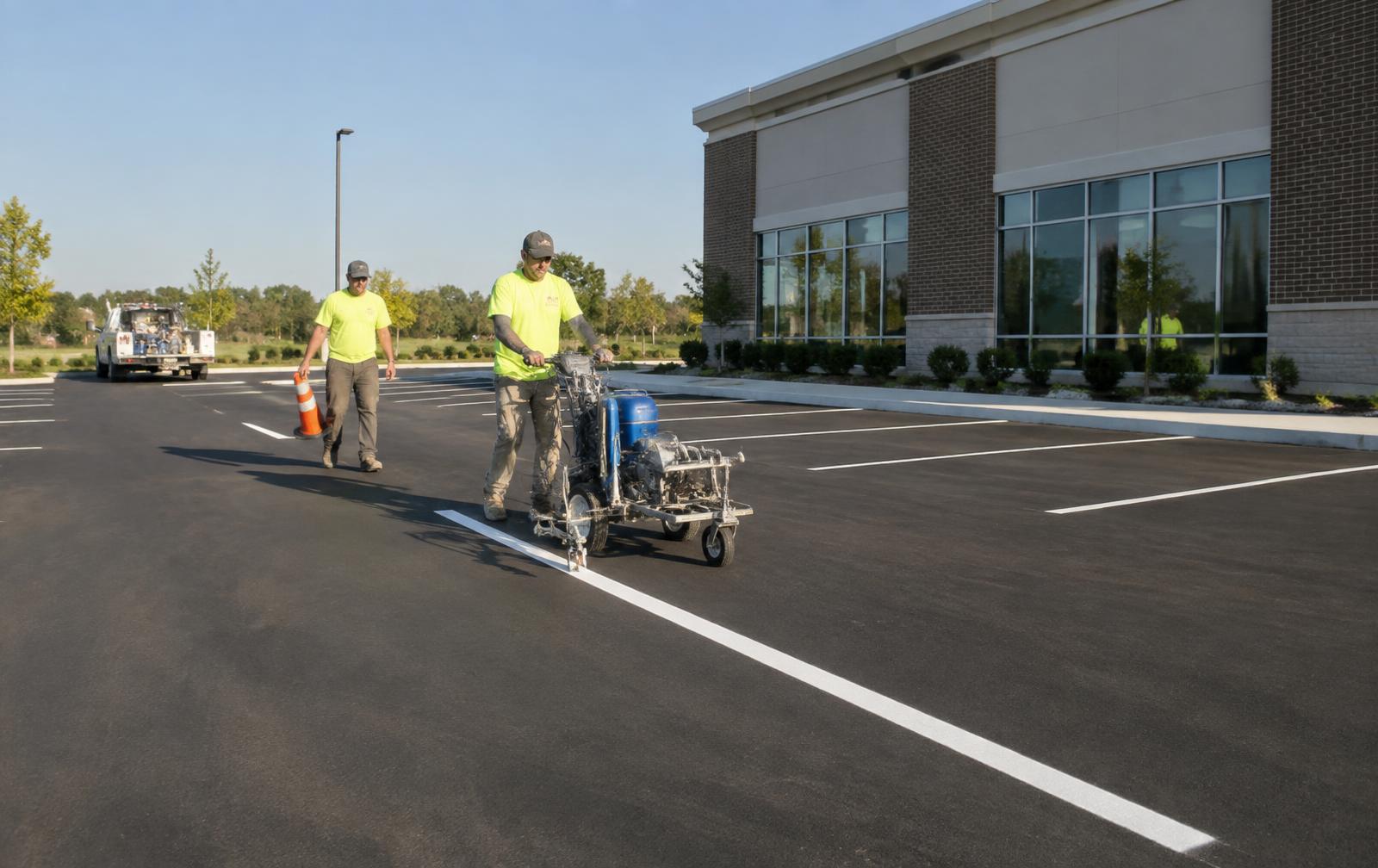
What's included with crosswalk & stop bar markings in Boston
- Continental (ladder) and standard crosswalks
- Stop bars and yield lines
- Speed hump chevrons and markings
- "STOP", "SLOW" and "XING" word legends
- School and campus pedestrian routes
- Optional thermoplastic for high-traffic crossings
How we work in Boston
- 1
Walk the pedestrian routes
We look at where people actually cross — building entries, sidewalks and transit stops — before marking anything.
- 2
Layout
Crosswalk bars and stop bars are chalked to consistent widths and spacing so they read clearly to drivers.
- 3
Paint or thermoplastic
Traffic paint for most private lots; heat-applied thermoplastic where turning traffic wears paint quickly.
- 4
Reopen safely
Crossings are coned until cured so nobody walks through wet paint.
Crosswalk & Stop Bar Markings pricing in Boston
$150–$450 per crosswalk; stop bars from $40 each
Thermoplastic costs more up front but typically lasts three to five times longer than paint.
Crosswalk & Stop Bar Markings in Boston: common questions
How much does crosswalk & stop bar markings cost in Boston, MA?
Typical pricing is $150–$450 per crosswalk; stop bars from $40 each. Thermoplastic costs more up front but typically lasts three to five times longer than paint. We send a fixed written quote for Boston properties, usually the same or next day.
How quickly can you start crosswalk & stop bar markings in Boston?
Same-day site visits, overnight crews available. Emergency and overnight work is available across Suffolk County — call 781-675-1497 any time.
What rules apply to crosswalk & stop bar markings in Boston, Massachusetts?
We lay out and mark to MUTCD conventions and MassDOT practice. If your site plan or an inspector's notice sets specific requirements, we follow that document.
Which Boston neighborhoods do you serve?
All of them, including Seaport District, Back Bay, Dorchester, Fenway. We also cover nearby Cambridge, Somerville, Brookline.
When is the best time to schedule crosswalk & stop bar markings in Boston?
Outdoor work runs roughly April through early November, when pavement stays above about 50°F. Late spring after plow season and September–October are ideal in Suffolk County.
What is a continental crosswalk?
A continental crosswalk uses wide bars running parallel to traffic, like a ladder. It's far more visible to drivers than two thin parallel lines, which is why it's recommended at busy crossings.
Do private parking lots have to follow the MUTCD?
The Manual on Uniform Traffic Control Devices applies to roads open to public travel, and many towns expect private lots to follow it too. Using MUTCD layouts keeps markings familiar to drivers and defensible if there's ever an incident.
How wide should a stop bar be?
Stop bars are typically 12 to 24 inches wide and placed ahead of the crosswalk or stop sign. We size them to match the drive aisle and sightlines.
Crosswalk & Stop Bar Markings in Boston neighborhoods
Crosswalk & Stop Bar Markings near Boston
Other services in Boston
- Parking Lot Striping in Boston
- Re-Striping & Layout Design in Boston
- ADA & Handicap Striping in Boston
- Pavement Markings & Stenciling in Boston
- Warehouse & Factory Floor Striping in Boston
- 24/7 Emergency & After-Hours Striping in Boston
- Fire Lane & Curb Painting in Boston
- EV Charging Stall Striping in Boston
- Line Removal & Blackout in Boston
- Thermoplastic Pavement Markings in Boston
- Sports Court & Playground Lines in Boston